Why Your SERP Data Collection Needs to Be Faster

Updating Data Gathering in major metropolitan centers
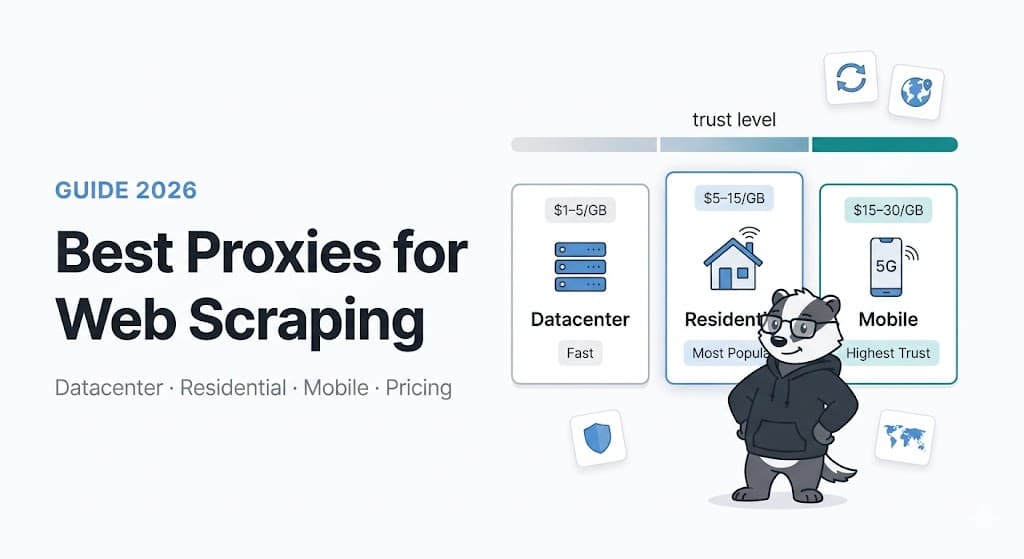
The year 2026 has actually introduced a set of technical obstacles for information extraction that were largely theoretical just a few years back. In this environment, fixed IP rotation and standard user-agent switching no longer be sufficient for high-volume harvesting. Security suppliers have shifted toward behavioral analysis and deep packet inspection, making it almost difficult for standard bots to stay undiscovered for long. For any business operating in the global market, success depends on the capability to imitate human surfing patterns at a granular level.As bot detection software application has actually ended up being more predictive, the logic behind proxy management has actually had to progress. No longer can a system just cycle through a list of IP addresses. Rather, AI-driven proxy reasoning now examines the reputation of an IP in real-time against specific target domains. This indicates if a property IP in a specific region has a high success rate with e-commerce targets but stops working on social media platforms, the system instantly routes traffic based upon those historic efficiency metrics.
The Shift Towards Behavioral Fingerprinting in 2026
Security stacks in 2026 prioritize the "browser fingerprint" over the IP address itself. Even with a clean domestic proxy, a mismatch in TLS version, cipher suites, or canvas making data will set off an immediate block. High-scale operations now rely on AI to generate constant, possible hardware profiles for every session. This consists of replicating battery status, screen resolution, and even mouse movements that line up with the specific device being spoofed.The complexity of these defenses means that data extraction efforts should be more calculated than ever. When a request is sent out, the proxy gateway acts as a decision engine. It analyzes the target site's present security posture and decides whether to use a data center IP, an ISP-backed proxy, or a high-cost domestic node. This decision is made in milliseconds to maintain the speed required for enterprise-level operations.
Optimizing Success Rates Through Predictive Routing
Success in 2026 is measured by the ratio of successful data go back to blocked requests. Frequent blocks do more than just slow down a project. They burn through proxy budget plans and can lead to long-term blacklisting of whole IP varieties. Machine learning designs now predict the likelihood of a block before a demand is even sent. These designs consider the time of day, the present load on the target server, and the recent "health" of the proxy pool.By executing these predictive layers, companies can keep high throughput without the continuous requirement for manual intervention. When a particular series of IPs begins to reveal indications of fatigue-- evidenced by increased latency or subtle modifications in the HTML action-- the system immediately rests those IPs. This permits the credibility of the swimming pool to recover, ensuring that information retrieval remains stable over long-lasting projects.
The Role of Asia Virtual Solutions Efficiency in Modern Infrastructure
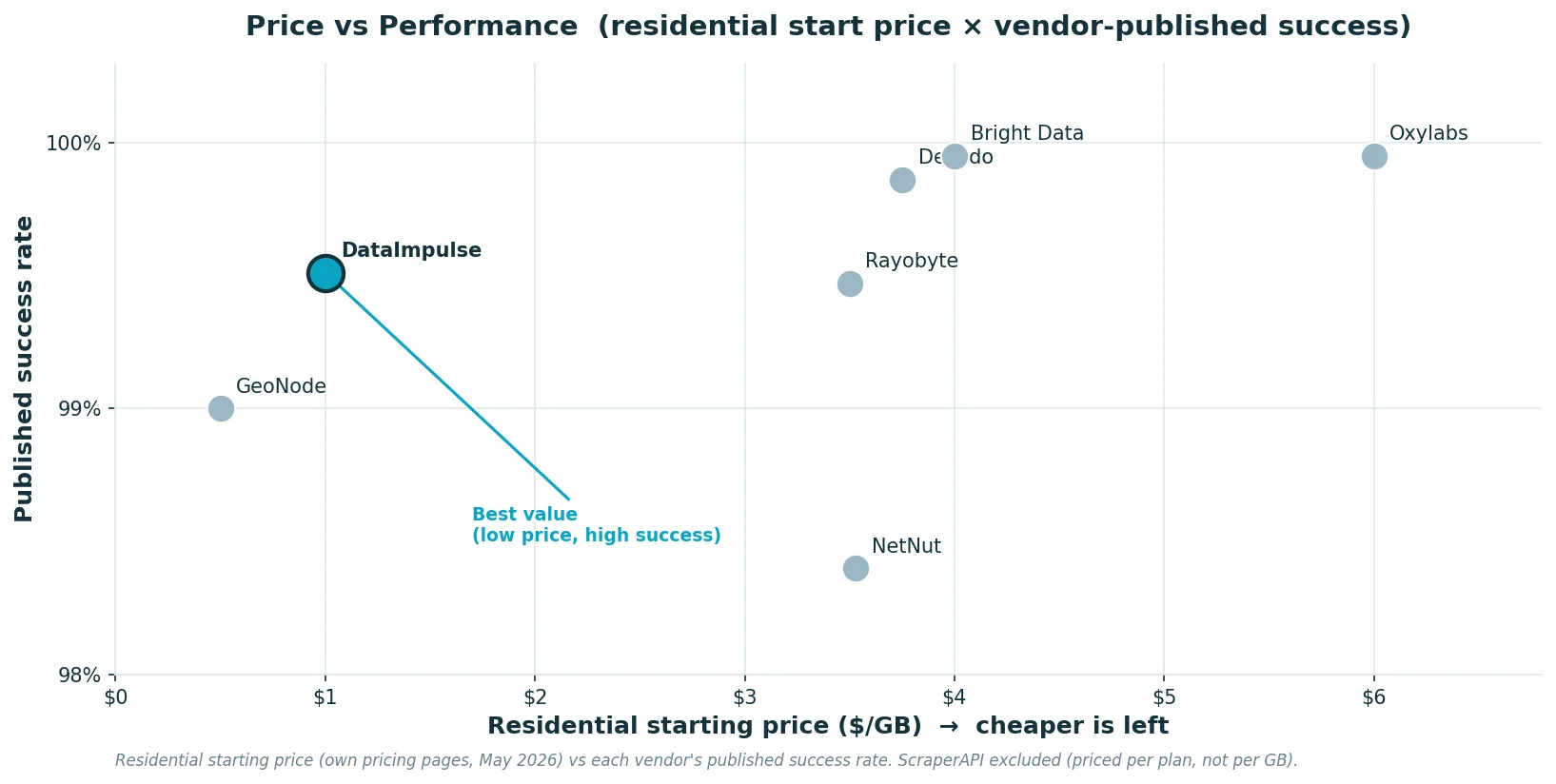
Keeping an one-upmanship in the data-driven market of 2026 requires more than simply raw compute power. It needs an architectural concentrate on the middle layer where proxies and scrapers meet. Organizations needing competence in Asia Virtual Solutions Efficiency must prioritize IP reputation and session consistency to avoid the risks of modern-day firewall programs. Without this focus, even the most innovative scraping scripts will stop working versus the neural-network defenses used by significant web platforms.
Overcoming TLS and Protocol-Level Detection
Among the most significant modifications in 2026 is the prevalent adoption of advanced TLS fingerprinting. Modern firewalls take a look at the particular method a client works out an encrypted connection. If the "handshake" looks like it came from a basic library instead of a genuine web browser like Chrome or Safari, the connection is dropped. AI-driven proxy logic now includes protocol-level spoofing, where the gateway modifies the handshake to match the anticipated profile of a legitimate user.This level of information encompasses HTTP/3 and QUIC protocols. As more of the web moves toward these quicker, more secure connection approaches, scrapers should keep speed. Fixed setups are a liability. Instead, systems must dynamically change their connection specifications based on what the target server supports and expects. This lowers the "noise" created by the scraper, making the traffic indistinguishable from that of a standard consumer gadget in any urban center.
Economic Efficiency in High-Volume Scraping
Expense management is a primary issue for any enterprise-scale data task. Residential proxies remain pricey, and using them for each single request is seldom sustainable. Advanced proxy reasoning uses a tiered approach. It starts with lower-cost ISP or data center proxies and just intensifies to domestic IPs when it spots a "soft block" or a CAPTCHA challenge.This tiered system guarantees that the most costly resources are utilized just when required. By analyzing the action headers of the target site, the AI can determine if a failure was because of a temporary server mistake or a targeted block. If it is the latter, it switches to a more "human" IP and changes the behavioral simulation criteria. Embracing Asia Virtual Solutions Scalable Solving Solutions enables developers to focus on data quality instead of infrastructure maintenance, as the proxy layer manages the heavy lifting of bypass logic.
Session Perseverance and Cookie Management
In 2026, the concept of a "stateless" crawl is mainly dead for any site with significant security. Sites now track user journeys throughout numerous pages. If a scraper jumps straight to a checkout page or a deep item listing without any prior history, it is flagged. AI reasoning now manages complicated session states, including the accumulation of cookies and the execution of background scripts that a typical internet browser would run.The proxy reasoning must make sure that a single session remains tied to the exact same IP or at least the same IP block for its whole period. If a session unexpectedly jumps from an IP in one region to one on the other side of the world, the account or session is immediately terminated by the target's security system. Intelligent rotation makes sure that IP modifications appear natural, maybe mimicking a user moving from a home Wi-Fi connection to a mobile 5G network.
Handling CAPTCHAs and Interactive Challenges
The CAPTCHAs of 2026 are no longer simple image grids. They are frequently unnoticeable and count on tracking how a user interacts with the whole page. Some even utilize "proof of work" difficulties that force the customer to fix an intricate mathematical puzzle in the background to prove they are not a low-resource bot. AI-driven entrances can now fix these puzzles or mimic the needed interaction patterns to bypass the check without human input.When an obstacle can not be bypassed automatically, the proxy logic identifies the very best course forward. This might involve rotating to a "cleaner" IP that is less most likely to be challenged or using a dedicated decoding service. The key is that the choice is made programmatically based on the cost-benefit analysis of the specific information point being obtained.
The Value of Geo-Location Precision
Regional prices, localized content, and differing availability make geo-location accuracy a requirement for many data tasks. In any local market, the information seen by a user in one postal code might differ from that seen in another. Proxy reasoning in 2026 enables hyper-local targeting, where requests are routed through nodes in particular communities to record the most accurate data possible.This level of precision is just possible through an enormous, distributed network of domestic and mobile nodes. AI reasoning handles the distribution of these requests to ensure that no single region is over-taxed, which would draw attention from the target's security team. It balances the load throughout the available swimming pool while strictly sticking to the geographical requirements of the project.
Future-Proofing Data Pipelines
As we look toward the remainder of 2026 and into the future, the arms race between data collectors and security suppliers will just intensify. The dependence on artificial intelligence is not a high-end but a necessity for survival. Systems that can not adjust to brand-new detection techniques in real-time will discover themselves locked out of the most valuable data sources on the web.The focus for engineering teams must be on structure versatile systems that deal with the proxy layer as a dynamic part. By delegating the complexities of IP reputation, fingerprinting, and behavioral simulation to a smart logic layer, companies can guarantee their information pipelines remain open. The goal is to create a system that is as resilient as the web itself, capable of discovering a course to the information despite the challenges positioned in its way. This approach reduces downtime and ensures that the flow of information-- the lifeblood of contemporary company-- continues without disturbance.